mercredi 8 février 2012

_M_ [ stands for Matthieu Chedid]
Voila un des chanteurs de la scène francaise. C'est un talentueux musicien avant tout et un chanteur ayant un univers a part . C'est un vrai showman en concert live !
Enjoy !
"onde sensuelle"
Enjoy !
"je dis aime"
"onde sensuelle"
"Machistador"
samedi 4 février 2012
Vanessa Paradis
Elle devient célèbre dès l'âge de 14 ans avec son premier disque et la chanson "joe le taxi". Elle mène depuis une carrière reconnue dans la musique et le cinéma.
Depuis 1998, elle vit avec l'acteur américain Johnny Depp, père de ses deux enfants : Lily-Rose Melody, née le 27 mai 1999, et Jack John Christopher III, né le 9 avril 2002. Les deux acteurs partagent leur vie entre la France et les États-Unis.
Here is her first album when she was 14 !!
20 years later, her last album was made with the famous french musician -M-.
This song : Divine Idylle, is about her relationship with Johnny Depp. She explains how complementary they are .
Depuis 1998, elle vit avec l'acteur américain Johnny Depp, père de ses deux enfants : Lily-Rose Melody, née le 27 mai 1999, et Jack John Christopher III, né le 9 avril 2002. Les deux acteurs partagent leur vie entre la France et les États-Unis.
Here is her first album when she was 14 !!
20 years later, her last album was made with the famous french musician -M-.
This song : Divine Idylle, is about her relationship with Johnny Depp. She explains how complementary they are .
jeudi 2 février 2012
Marion Cotillard (one of the most talented and famous fench actrice)
Marion Cotillard, who won the Best Actress Academy Award for her role as Édith Piaf in " La Mome " (2007) (retitled "La Vie en Rose" in the United States), is the second actress to win an acting Oscar performing in a language other than English. Her portrayal of "Piaf" " was described as one of the greatest performances on film ever". At the Berlin International Film Festival, where the film premiered, Cotillard was given a 15-minute standing ovation. She one one of the most admired french actrice.
Here is the trailer of "La Mome" which portrays the harsh life of a corner stone in the History of french singers : Edith Piaf !
Here is the trailer of "La Mome" which portrays the harsh life of a corner stone in the History of french singers : Edith Piaf !
Here is one of Edith Paif most famous song, I bet you heard it before: " la vie en rose" !
Marion Cotillard's life was about to change when she turned a move called "jeux d'enfant" transalte by " Love me if you dare" . In fact , not only she became famous after this movie but she met Guillaume Canet who shared the role with her, they fell in love and are still together at the moment. They are one a the most glamorous and succesful french couple !
Here is the trailer ! enjoy it !
mercredi 1 février 2012
"ne le dis a personne" a french thriller.
Surement le meilleur film policier francais !
Here is probably one of the best french thriller I have ever seen : ne le dis a personne. It was realized by a famous french acteur : Guillaume Canet. He is famous for his talent in his several movies but also for his relationship with a world wide famous French actrice Marion Cotillard. She was seen in the latest movie
" Inception " for example.
VOILA LA BANDE D ANNONCE DE : NE LE DIS A PERSONNE !
A VOIRE ABSOLUMENT !
Here is probably one of the best french thriller I have ever seen : ne le dis a personne. It was realized by a famous french acteur : Guillaume Canet. He is famous for his talent in his several movies but also for his relationship with a world wide famous French actrice Marion Cotillard. She was seen in the latest movie
" Inception " for example.
VOILA LA BANDE D ANNONCE DE : NE LE DIS A PERSONNE !
A VOIRE ABSOLUMENT !
dimanche 29 janvier 2012
RENNES
Rennes is the biggest city in Bretagne, and the city where I am coming from. If you are interested, this is an article from THE NEWYORK TIMES which illustrates life in a city famous for it is student's population.
History and Youth in Rennes, Brittany

History and Youth in Rennes, Brittany
WHILE ogling an oversize wheel of Camembert at a bountiful summer farmers’ market in Rennes, Brittany, I momentarily perked up from my lost-in-cheese stupor at the surprising sound of two British tourists in conversation. It was the first time I had heard someone else speaking English since we had arrived in Rennes 24 hours earlier. It was August, when Parisians leave for their holidays and the Americans arrive, a phenomenon that’s hard to miss while trailing crowds in the French capital.
In Rennes, though, we were a novelty. The city’s curving cobblestone streets were filled with meandering couples on slow-paced weekend excursions, sipping cider and nibbling crêpes at sidewalk cafes, and nearly all of them were French — or Breton, as many will note.
Rennes is the historic capital of Brittany, France’s northwesternmost region and at one time an independent kingdom with a distinct culture and language more influenced by nearby Britain and the Celtic nations than Paris. It still has a distinctly medieval feel, enhanced by its weather, which has more in common with foggy London than Paris, which is just a two-hour ride away on the high speed TGV train. But this is not a city that begs for sunshine: the Gothic architecture, winding streets and hearty cuisine are often most appealing on a gloomy day.
And in winter, as temperatures decline, Rennes retains its charm. The city is still pleasantly light on tourists, though thousands of visitors arrive for Les Rencontres Trans Musicales de Rennes, the annual festival that will run from Dec. 1 to 3 this year. Popularly known as Les Transmusicales, the festival is a sort of South by Southwest for the French set — a slice of modernity in a town steeped in the centuries-old history of Brittany.
After arriving at the busy modern train station, my girlfriend, Alex, and I crossed over the narrow Vilaine River into Rennes’ old city, and were greeted by the surprisingly grandiose Place de la Mairie. To one side of the spacious plaza, the opulent 19th-century opera house is designed to look as if its colossal rotunda could slide across the square and fit like a puzzle piece into the concave center of the Baroque city hall. But Rennes is a much less grandiose city than this flamboyant architectural welcoming would suggest. Its real draw lies just north of here, where much of the once-walled medieval city is intact, its streets lined with striking maisons à colombage — “half-timbered” homes dating back to the 15th century, fronted by giant wooden lattices made from the region’s once plentiful forests.

Though, like Paris, Rennes has a bike-sharing system, as well as a modest one-line metro, its greatest pleasure lies in getting lost on foot in the old city. We spent one afternoon wandering secluded streets like Rue des Portes Mordelaises, which was hidden behind an arched doorway in a remaining slice of the stone ramparts that once protected the city, and into plazas humbler than Place de la Mairie, like Place du Champ Jacquet, which is lined by a fully intact row of those towering timber-framed houses. In many places the sides of the historic buildings are covered in patriotic murals depicting Brittany’s black-and-white coat of arms, and street signs are written in both French and Breton. (This is mostly as a proud nod to this heritage; few people still speak the ancient language.)
Not that Rennes is all about quaint pathways and plazas. It is also home to two large universities and approximately 60,000 students, and at night the old city comes alive with a vibrant party scene. Most of the bars are clustered around Rue St.-Michel, known to locals as “la rue de la soif” — the street of thirst. After dark on any given weekend, which, following the university schedule, begins on Thursday, you can find hordes of students chatting on the sidewalk and drinking beers long after the 1 a.m. closing time.
A magnet for musicians and artists, Rennes first burst onto the cultural map in the 1980s when a musical scene sprang up around some local new-wave bands like Marquis de Sade, who in 1979 headlined the first Transmusicales festival. The then small gathering of local groups has since grown to include everything from French hip-hop to British electronica and American indie rock.
“When I heard the buzz here, I just had to come, because something was happening,” said Philippe Maujard, a musician who got his start in Rennes in the ’80s with the rock band Ubik, and who earlier this year founded the record label Wild Wild Rennes. “You went in a bar and everyone you met wanted to be a singer, a musician or a writer.”
That draw still holds for many young would-be rock stars and artists. On a rainy afternoon at Le Barantic (4, rue S.-Michel), a dive pub with a new-wave soundtrack and scruffy art school types all around, a street artist who gave only his tag name, Zilda, said that “it’s the liveliness, the spirit of the city that brings people here.”
Rennes provides an opportunity for youth from Brittany’s rural areas to get a taste of the cosmopolitan life without leaving their region or culture behind, a notable invitation to many who see themselves as Breton first and French second. As Zilda raised a glass to toast, he taught us to say the Breton — or Breizh, in the old language — version of cheers: yec’hed mat.
After leaving the bar, we took Zilda’s suggestion and popped into A La Fournée St.-Michel bakery (23, rue St.-Michel) to soak up our beer with a kouign amann, a Breizh specialty that, Zilda said proudly, is “the fattiest pastry in all of Europe.” The flaky crust and extraordinarily buttery interior more than held their own against the more famous Parisian croissant.
More than a few traditional crêperies line the old city’s narrow streets, but there’s also food with a more contemporary twist, often playing off the culinary vocabulary of Brittany. We headed to Café Breton (14, rue Nantaise; cafe-breton.fr), where mismatched vintage tables sit below an exposed timber ceiling. The menu lies somewhere between classic French and nouveau Brooklyn: pork cheek confit laced with a caramel-balsamic reduction, scallop tartare topped with a roulade of celeriac, Granny Smith apples and curry. Dinner starts with a kir Breton, a few drops of crème de cassis in a glass of locally made cider. The cool climate in Brittany supports apples rather than grapes; tart, not-at-all-sweet bottles of hard cider are on nearly every menu here.
The cultural scene in Rennes is largely based on the minifestivals that pop up nearly every weekend, from improvisational jazz shows to frequent festoù-noz, traditional Celtic-tinged Breizh dance parties. (A copy of L’Agenda, available at a metro station, is handy for its listings.) The biggest, though, is Transmusicales (http://www.lestrans.com/), which mixes big-name international acts (M.I.A. headlined last year; this year will feature the British singer Ghostpoet and the American hip-hop group Spank Rock) with up-and-coming bands from the Rennes scene, attracting 30,000 music lovers for three nights of concerts inside cavernous hangars adjacent to the airport, with spinoff shows at the bars on St.-Michel.

Art lovers can look forward to the 2012 edition of Les Ateliers de Rennes (lesateliersderennes.fr), a contemporary art biennale from Sept. 14 to Dec. 9 at galleries like 40mcube (48, avenue du Sergent Maginot) and La Criée (Place Honoré Commeurec). “For a long time Rennes has been known as a city where music is extremely important,” said Marie Lemeltier, the communications and artistic project coordinator at La Criée. “Now it is becoming a city that is not just about music, but also dance, art and theater.”
After all those late festival nights, a must on early Saturday mornings is Marché des Lices, one of the largest markets in France. In a plaza once used for jousting tournaments, several hundred farmers now sell fruit, vegetables and seafood. The two covered market halls in the plaza’s center hold yet more stands, selling charcuterie, pastries and giant wheels of cheese. It’s a good refuge if a shower breaks out, a frequent occurrence in Brittany.
Braving a downpour on our trip, we were enticed back out from the covered market hall by an array of food trucks just outside, selling rotisserie chicken and Brittany’s signature galettes — savory, crêpe-like buckwheat pancakes. They are served either folded in a square over ham, cheese and a fried egg, or buttered and wrapped around a grilled hot sausage — a warming, greasy treat for a rainy day.

I’m told this market is even more vibrant on the rare sunny days, when flower vendors from across Brittany also line the plaza. But on this dreary gray morning, with shoppers running between raindrops and barely another tourist in sight, the steam rose from the hot galette, warming my hands and face. This was exactly the Rennes I had hoped to discover.
IF YOU GO
Trains from the Montparnasse train station in Paris leave throughout the day. The fastest line (TGV Atlantique) takes just over two hours. One-way fares start at 25 euros ($33.60 at $1.35 the euro). The one-line metro in Rennes stops at the train station, and taxis are also available, though most sights are within walking distance.
WHERE TO STAY
Hotel de Nemours (5, rue de Nemours; 33-2-99-78-26-26, hotelnemours.com). Centrally situated between the train station and the old city, this boutique property has 29 clean and simple rooms, starting at 66 euros.
LeCoq-Gadby (156, rue d’Antrain; 33-2-99-38-05-55; lecoq-gadby.com). A mile north of the old city, this 17th-century family estate turned “urban resort” offers a spa, a Michelin-starred restaurant, and a lounge with a fireplace. Rates range from 119 euros for a single room to 290 euros for a more spacious apartment.
In Rennes, though, we were a novelty. The city’s curving cobblestone streets were filled with meandering couples on slow-paced weekend excursions, sipping cider and nibbling crêpes at sidewalk cafes, and nearly all of them were French — or Breton, as many will note.
Rennes is the historic capital of Brittany, France’s northwesternmost region and at one time an independent kingdom with a distinct culture and language more influenced by nearby Britain and the Celtic nations than Paris. It still has a distinctly medieval feel, enhanced by its weather, which has more in common with foggy London than Paris, which is just a two-hour ride away on the high speed TGV train. But this is not a city that begs for sunshine: the Gothic architecture, winding streets and hearty cuisine are often most appealing on a gloomy day.
And in winter, as temperatures decline, Rennes retains its charm. The city is still pleasantly light on tourists, though thousands of visitors arrive for Les Rencontres Trans Musicales de Rennes, the annual festival that will run from Dec. 1 to 3 this year. Popularly known as Les Transmusicales, the festival is a sort of South by Southwest for the French set — a slice of modernity in a town steeped in the centuries-old history of Brittany.
After arriving at the busy modern train station, my girlfriend, Alex, and I crossed over the narrow Vilaine River into Rennes’ old city, and were greeted by the surprisingly grandiose Place de la Mairie. To one side of the spacious plaza, the opulent 19th-century opera house is designed to look as if its colossal rotunda could slide across the square and fit like a puzzle piece into the concave center of the Baroque city hall. But Rennes is a much less grandiose city than this flamboyant architectural welcoming would suggest. Its real draw lies just north of here, where much of the once-walled medieval city is intact, its streets lined with striking maisons à colombage — “half-timbered” homes dating back to the 15th century, fronted by giant wooden lattices made from the region’s once plentiful forests.
Though, like Paris, Rennes has a bike-sharing system, as well as a modest one-line metro, its greatest pleasure lies in getting lost on foot in the old city. We spent one afternoon wandering secluded streets like Rue des Portes Mordelaises, which was hidden behind an arched doorway in a remaining slice of the stone ramparts that once protected the city, and into plazas humbler than Place de la Mairie, like Place du Champ Jacquet, which is lined by a fully intact row of those towering timber-framed houses. In many places the sides of the historic buildings are covered in patriotic murals depicting Brittany’s black-and-white coat of arms, and street signs are written in both French and Breton. (This is mostly as a proud nod to this heritage; few people still speak the ancient language.)
Not that Rennes is all about quaint pathways and plazas. It is also home to two large universities and approximately 60,000 students, and at night the old city comes alive with a vibrant party scene. Most of the bars are clustered around Rue St.-Michel, known to locals as “la rue de la soif” — the street of thirst. After dark on any given weekend, which, following the university schedule, begins on Thursday, you can find hordes of students chatting on the sidewalk and drinking beers long after the 1 a.m. closing time.
A magnet for musicians and artists, Rennes first burst onto the cultural map in the 1980s when a musical scene sprang up around some local new-wave bands like Marquis de Sade, who in 1979 headlined the first Transmusicales festival. The then small gathering of local groups has since grown to include everything from French hip-hop to British electronica and American indie rock.
“When I heard the buzz here, I just had to come, because something was happening,” said Philippe Maujard, a musician who got his start in Rennes in the ’80s with the rock band Ubik, and who earlier this year founded the record label Wild Wild Rennes. “You went in a bar and everyone you met wanted to be a singer, a musician or a writer.”
That draw still holds for many young would-be rock stars and artists. On a rainy afternoon at Le Barantic (4, rue S.-Michel), a dive pub with a new-wave soundtrack and scruffy art school types all around, a street artist who gave only his tag name, Zilda, said that “it’s the liveliness, the spirit of the city that brings people here.”
Rennes provides an opportunity for youth from Brittany’s rural areas to get a taste of the cosmopolitan life without leaving their region or culture behind, a notable invitation to many who see themselves as Breton first and French second. As Zilda raised a glass to toast, he taught us to say the Breton — or Breizh, in the old language — version of cheers: yec’hed mat.
After leaving the bar, we took Zilda’s suggestion and popped into A La Fournée St.-Michel bakery (23, rue St.-Michel) to soak up our beer with a kouign amann, a Breizh specialty that, Zilda said proudly, is “the fattiest pastry in all of Europe.” The flaky crust and extraordinarily buttery interior more than held their own against the more famous Parisian croissant.
More than a few traditional crêperies line the old city’s narrow streets, but there’s also food with a more contemporary twist, often playing off the culinary vocabulary of Brittany. We headed to Café Breton (14, rue Nantaise; cafe-breton.fr), where mismatched vintage tables sit below an exposed timber ceiling. The menu lies somewhere between classic French and nouveau Brooklyn: pork cheek confit laced with a caramel-balsamic reduction, scallop tartare topped with a roulade of celeriac, Granny Smith apples and curry. Dinner starts with a kir Breton, a few drops of crème de cassis in a glass of locally made cider. The cool climate in Brittany supports apples rather than grapes; tart, not-at-all-sweet bottles of hard cider are on nearly every menu here.
The cultural scene in Rennes is largely based on the minifestivals that pop up nearly every weekend, from improvisational jazz shows to frequent festoù-noz, traditional Celtic-tinged Breizh dance parties. (A copy of L’Agenda, available at a metro station, is handy for its listings.) The biggest, though, is Transmusicales (http://www.lestrans.com/), which mixes big-name international acts (M.I.A. headlined last year; this year will feature the British singer Ghostpoet and the American hip-hop group Spank Rock) with up-and-coming bands from the Rennes scene, attracting 30,000 music lovers for three nights of concerts inside cavernous hangars adjacent to the airport, with spinoff shows at the bars on St.-Michel.
Art lovers can look forward to the 2012 edition of Les Ateliers de Rennes (lesateliersderennes.fr), a contemporary art biennale from Sept. 14 to Dec. 9 at galleries like 40mcube (48, avenue du Sergent Maginot) and La Criée (Place Honoré Commeurec). “For a long time Rennes has been known as a city where music is extremely important,” said Marie Lemeltier, the communications and artistic project coordinator at La Criée. “Now it is becoming a city that is not just about music, but also dance, art and theater.”
After all those late festival nights, a must on early Saturday mornings is Marché des Lices, one of the largest markets in France. In a plaza once used for jousting tournaments, several hundred farmers now sell fruit, vegetables and seafood. The two covered market halls in the plaza’s center hold yet more stands, selling charcuterie, pastries and giant wheels of cheese. It’s a good refuge if a shower breaks out, a frequent occurrence in Brittany.
Braving a downpour on our trip, we were enticed back out from the covered market hall by an array of food trucks just outside, selling rotisserie chicken and Brittany’s signature galettes — savory, crêpe-like buckwheat pancakes. They are served either folded in a square over ham, cheese and a fried egg, or buttered and wrapped around a grilled hot sausage — a warming, greasy treat for a rainy day.
I’m told this market is even more vibrant on the rare sunny days, when flower vendors from across Brittany also line the plaza. But on this dreary gray morning, with shoppers running between raindrops and barely another tourist in sight, the steam rose from the hot galette, warming my hands and face. This was exactly the Rennes I had hoped to discover.
IF YOU GO
Trains from the Montparnasse train station in Paris leave throughout the day. The fastest line (TGV Atlantique) takes just over two hours. One-way fares start at 25 euros ($33.60 at $1.35 the euro). The one-line metro in Rennes stops at the train station, and taxis are also available, though most sights are within walking distance.
WHERE TO STAY
Hotel de Nemours (5, rue de Nemours; 33-2-99-78-26-26, hotelnemours.com). Centrally situated between the train station and the old city, this boutique property has 29 clean and simple rooms, starting at 66 euros.
LeCoq-Gadby (156, rue d’Antrain; 33-2-99-38-05-55; lecoq-gadby.com). A mile north of the old city, this 17th-century family estate turned “urban resort” offers a spa, a Michelin-starred restaurant, and a lounge with a fireplace. Rates range from 119 euros for a single room to 290 euros for a more spacious apartment.
recette de crèpes !!!
Here is receipe for crepes. It is really easy to do ! You can just use a normal pan...
Temps de préparation 10 min - Temps de cuisson 3 min
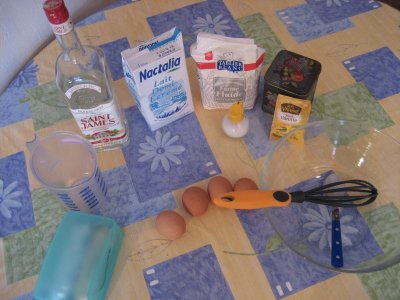
Dans un saladier, verser la farine et les oeufs. Puis progressivement ajoutez le lait tout en mélangeant avec votre fouet.
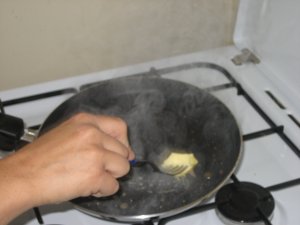
Versez une demi-louche de votre pâte à crêpe et faites cuire 1 à 2 minutes par face.
Voila vos crèpes sont prètes, vous pouvez maintenant les déguster. Bon appétit!
Temps de préparation 10 min - Temps de cuisson 3 min
Liste des ingrédients
- 250g de farine
- 4 oeufs
- un demi-litre de lait
- 1 pincée de sel
- 50 grammes de beurre
- 1 sachet de sucre vanillé
- 1 cuillère à soupe de rhum (5 cl)
Variante : pour rendre les crêpes plus savoureuses, remplacer une partie du lait par de la crème fraîche.
Dans un saladier, verser la farine et les oeufs. Puis progressivement ajoutez le lait tout en mélangeant avec votre fouet.
Laissez reposer la pâte à crêpe si possible une heure
Faites chauffer une poêle, une fois chaude, versez un peu de beurre pour graisser la poêle.
Faites chauffer une poêle, une fois chaude, versez un peu de beurre pour graisser la poêle.
Recouvrez votre saladier d'un linge pour laisser reposer la pâte.
Versez une demi-louche de votre pâte à crêpe et faites cuire 1 à 2 minutes par face.
Voila vos crèpes sont prètes, vous pouvez maintenant les déguster. Bon appétit!
Brigitte, "battez vous" lyrics
Première vidéo:
Voilà, Brigitte , qui ont du succès depuis leur premier album l'année dernière avec leur titre phare "battez-vous" (could be translated by "fight!").
Voilà les paroles:
Parole de Battez-vous:
Voilà, Brigitte , qui ont du succès depuis leur premier album l'année dernière avec leur titre phare "battez-vous" (could be translated by "fight!").
Voilà les paroles:
Parole de Battez-vous:
Faites-vous la guerre pour me faire la cour
Maintenant battez-vous
Soyez gangsters, soyez voyous
Maintenant battez-vous
Toi mon tout, mon loubard
Tu serais mon lascar superstar
J’ai tellement besoin d’amour
De tes bras, de ta voix de velours
Sortez les dollars et les bijoux
Mettez-vous à genoux
Dans la Jaguar, dans la gadoue
Mettez-vous à genoux
Toi mon tout, mon loubard
Tu serais mon lascar superstar
J’ai tellement besoin d’amour
De tes bras, de ta voix de velours
J’ai tellement besoin d’amour
Tu ferais de moi ta belle de jour
Je rêve d’un king de kidnapping
De quitter mon pauvre living
Je veux du swing et du bling bling
Et que le meilleur gagne sur le ring
Toi mon tout, mon loubard
Tu serais mon lascar superstar
Moi j'ai si peur dans le noir
J’ai tellement besoin d’amour
De tes bras, de ta voix de velours
J’ai tellement besoin d’amour
Tu ferais de moi ta belle de jour
J’ai tellement besoin d’amour
Hey, maintenant battez-vous
Maintenant battez-vous
Soyez gangsters, soyez voyous
Maintenant battez-vous
Toi mon tout, mon loubard
Tu serais mon lascar superstar
J’ai tellement besoin d’amour
De tes bras, de ta voix de velours
Sortez les dollars et les bijoux
Mettez-vous à genoux
Dans la Jaguar, dans la gadoue
Mettez-vous à genoux
Toi mon tout, mon loubard
Tu serais mon lascar superstar
J’ai tellement besoin d’amour
De tes bras, de ta voix de velours
J’ai tellement besoin d’amour
Tu ferais de moi ta belle de jour
Je rêve d’un king de kidnapping
De quitter mon pauvre living
Je veux du swing et du bling bling
Et que le meilleur gagne sur le ring
Toi mon tout, mon loubard
Tu serais mon lascar superstar
Moi j'ai si peur dans le noir
J’ai tellement besoin d’amour
De tes bras, de ta voix de velours
J’ai tellement besoin d’amour
Tu ferais de moi ta belle de jour
J’ai tellement besoin d’amour
Hey, maintenant battez-vous
Faites-vous la guerre pour me faire la cour
Maintenant battez-vous
Soyez gangsters, soyez voyous
Maintenant battez-vous
Toi mon tout, mon loubard
Tu serais mon lascar superstar
J’ai tellement besoin d’amour
De tes bras, de ta voix de velours
Sortez les dollars et les bijoux
Mettez-vous à genoux
Dans la Jaguar, dans la gadoue
Mettez-vous à genoux
Toi mon tout, mon loubard
Tu serais mon lascar superstar
J’ai tellement besoin d’amour
De tes bras, de ta voix de velours
J’ai tellement besoin d’amour
Tu ferais de moi ta belle de jour
Je rêve d’un king de kidnapping
De quitter mon pauvre living
Je veux du swing et du bling bling
Et que le meilleur gagne sur le ring
Toi mon tout, mon loubard
Tu serais mon lascar superstar
Moi j'ai si peur dans le noir
J’ai tellement besoin d’amour
De tes bras, de ta voix de velours
J’ai tellement besoin d’amour
Tu ferais de moi ta belle de jour
J’ai tellement besoin d’amour
Hey, maintenant battez-vous
Maintenant battez-vous
Soyez gangsters, soyez voyous
Maintenant battez-vous
Toi mon tout, mon loubard
Tu serais mon lascar superstar
J’ai tellement besoin d’amour
De tes bras, de ta voix de velours
Sortez les dollars et les bijoux
Mettez-vous à genoux
Dans la Jaguar, dans la gadoue
Mettez-vous à genoux
Toi mon tout, mon loubard
Tu serais mon lascar superstar
J’ai tellement besoin d’amour
De tes bras, de ta voix de velours
J’ai tellement besoin d’amour
Tu ferais de moi ta belle de jour
Je rêve d’un king de kidnapping
De quitter mon pauvre living
Je veux du swing et du bling bling
Et que le meilleur gagne sur le ring
Toi mon tout, mon loubard
Tu serais mon lascar superstar
Moi j'ai si peur dans le noir
J’ai tellement besoin d’amour
De tes bras, de ta voix de velours
J’ai tellement besoin d’amour
Tu ferais de moi ta belle de jour
J’ai tellement besoin d’amour
Hey, maintenant battez-vous
Bienvenue
Bonjour les étudiants de Cooper,
I made this blog for the students of Cooper school who are intrested by discovering more about french culture. I will try to illustrate french culture through music, articles (in french or in english), movies, recipe, comics, political cartoons ... I hope you will enjoy discovering new artists.
I made this blog for the students of Cooper school who are intrested by discovering more about french culture. I will try to illustrate french culture through music, articles (in french or in english), movies, recipe, comics, political cartoons ... I hope you will enjoy discovering new artists.
Inscription à :
Articles (Atom)